
Monaco's public lifts, escalators and travelators: how the free vertical network works
Monaco runs 79 public lifts, 35 escalators and 8 travelators so that a city built on a cliff can be crossed on foot. Which links matter (station, Jardin Exotique, Fontvieille, Casino, Larvotto), who maintains them, what the 2019–2030 replacement programme has changed, and how to plan around a closure.
Key facts
- The network
- 79 public lifts, 35 escalators and 8 travelators (Government figure, page updated October 2026); about 140 installations once wheelchair platform lifts are counted
- Cost and hours
- Free, automatic and unstaffed; the street lifts run around the clock, escalators inside car parks, the station or the Fontvieille shopping centre follow the building's hours
- Who runs them
- Maintained and replaced by the Direction de l'Aménagement Urbain (DAU), +377 98 98 22 77, Monday to Friday 9:30–17:00
- Renewal programme
- 65 of the ~140 installations replaced between 2020 and the end of 2025; 90 identified for renewal in all, 30 more scheduled for 2026–2030
- Where to find them on a map
- The Government's 'Monaco Malin' leaflet (by district) and the tourist office's official city map; the Direction de la Prospective, de l'Urbanisme et de la Mobilité, 5 promenade Honoré II, hands out the leaflet
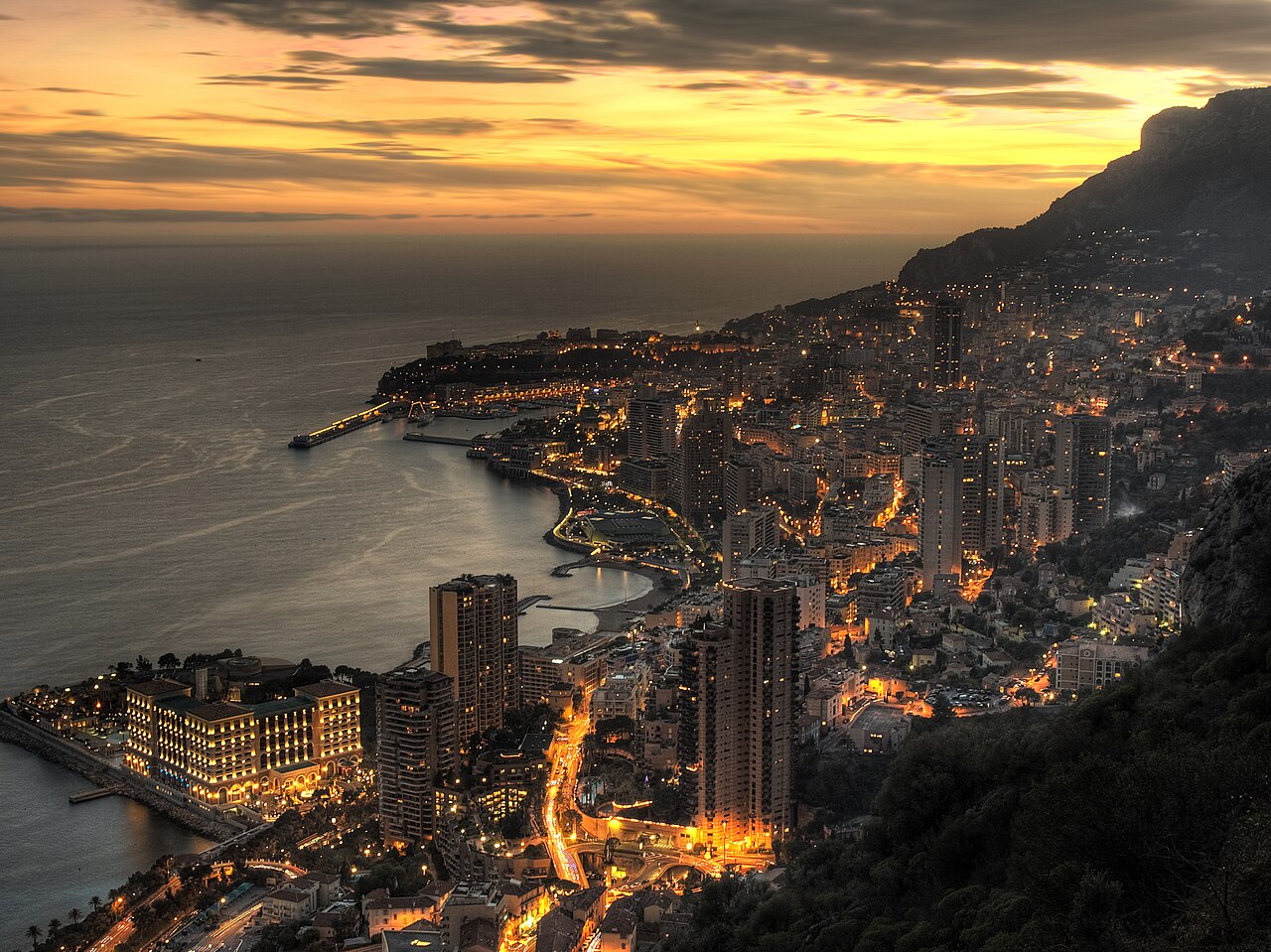
Monaco is two square kilometres wide and about 160 metres tall. The port sits at sea level, the Casino terrace some forty metres above it, the boulevard de Belgique and the Jardin Exotique higher still, and the border with Beausoleil runs along the top of the slope. Rather than fight that geography with roads, the Principality has spent fifty years threading lifts, escalators and travelators through its car parks, galleries and retaining walls, and it lets everyone use them for nothing. The result is that a city which looks unwalkable on a map is, in practice, crossed on foot: around 40 % of journeys inside Monaco are made walking.
This guide explains what the network consists of, which links a visitor or a new resident will actually use, who looks after it, and what the 2019–2030 renewal programme has changed.
The network in figures
The Government's practical-information portal, updated in October 2026, counts 79 public lifts, 35 escalators and 8 travelators. When the Direction de l'Aménagement Urbain (DAU) launched its renewal programme, it described a wider total of about 140 installations, which also included 8 platform lifts for wheelchair users, and it put the service life of a public lift at roughly fifteen years.
Three features make the system unusual:
- It is free and unstaffed. No ticket, card, code or attendant. The cabins are automatic and the cost is carried by the State budget.
- The street lifts run around the clock. The Government describes the public lifts as accessible at all times. Escalators or lifts that sit inside a building (the Jardin Exotique and Costa car parks, the railway station, the Fontvieille shopping centre galleries) follow that building's hours.
- It is designed as transport, not as a convenience. Many links are chains: a travelator feeds an escalator which feeds a lift, so that a 60-metre climb is done without a single step.
The links you will actually use
Nobody needs all 122 machines. These are the connections that structure daily movement, listed from west to east.
Fontvieille to the Rock and to the hospital level. The lifts set into the cliff on the boulevard Charles III climb from Fontvieille to the foot of Monaco-Ville, and a second set of installations starts from the promenade Honoré II. The escalators between the Jardin Animalier Rainier III and the Fontvieille shopping centre were taken out of service on 10 November 2025 for a renewal scheduled to last until the end of April 2026; the Government signposted the Terrasses de Fontvieille esplanade as the walking detour and the Charles III lifts as the quick alternative.
The Jardin Exotique hill. This is the steepest residential quarter and the one where the lifts are closest to being indispensable. The Hector Otto to boulevard du Jardin Exotique lift is described by the Government itself as a strategic link with no alternative route; when it was replaced in autumn 2021 a free shuttle ran every ten minutes between the Révoires building, the Parc Princesse Antoinette entrance and the Révoires school. Two further lifts run from the Parking du Jardin Exotique up to avenue Hector Otto, another links boulevard de Belgique to the boulevard du Jardin Exotique through the car park gallery at the Parc Princesse Antoinette entrance, and a separate cabin joins boulevard Hector Otto to the Moyenne Corniche. The Princess Grace Hospital (CHPG) is also tied to the Jardin Exotique level by a public link.
Moneghetti and the station. The Monaco-Monte-Carlo station is itself the biggest vertical machine in the Principality: it is built inside the hill, and its exits sit at three different levels. Six lifts serve the Monte-Carlo-side exit (they were out of service for a month in autumn 2023 after concrete from a neighbouring site fell into the shafts), travelators run along the galleries, and the step-free way in is the Pont Sainte-Dévote exit using the lifts of the station car park on avenue d'Alsace; the Parvis Sainte-Dévote exit has stairs. From the Place Sainte-Dévote a chain of public links climbs to Moneghetti and the boulevard de Belgique, and the lifts between boulevard de Belgique and the Sainte-Dévote station access are in the 2026 replacement batch. The station guide describes the exits in detail.
La Condamine and the port. The Condamine market lifts were among the first nine renewed, in 2020. Two escalators at 17 rue Grimaldi, beside the post office, were replaced in 2021. From the avenue de la Costa, the lifts of the Parking de la Costa (three cabins, renewed in 2021) drop to the port level; the Complexe Saint-Charles has two public lifts on its north side.
Monte-Carlo. Under the Carrefour de la Madone, the underground passage between the boulevard des Moulins and the avenue de la Madone had six escalators; in 2021 four were replaced and two removed to make room for a glass lift so that wheelchair users can reach the underground shops. From the Casino terraces, links descend to the Auditorium Rainier III and the boulevard Louis II at sea level; from the avenue des Citronniers a lift climbs to avenue de Grande-Bretagne. The escalators of the Galerie Prince Pierre and the lifts between avenue Crovetto Frères and avenue Prince Pierre (where a new footbridge is proposed) are on the 2026 programme.
Larvotto and Saint-Roman. From the Place des Moulins, the link down to the Larvotto beach is the one most visitors use without noticing it; further east, a lift joins the boulevard du Larvotto to Saint-Roman, the quarter on the Italian side of the border ridge.
Beausoleil. Since 12 September 2022, six mechanised links on the French side, inaugurated by Prince Albert II together with the first MonaBike station in Beausoleil, continue the climb from the boulevard des Moulins up through Beausoleil's terraced streets. See the Beausoleil guide.
The best map is the Government's free Monaco Malin leaflet, which shows the lifts, escalators and travelators district by district together with the MonaBike stations and bus stops. It is downloadable from the Mon Service Public portal and available from the Direction de la Prospective, de l'Urbanisme et de la Mobilité (5 promenade Honoré II, Hall A, 3rd floor, Monday to Friday 8:30–12:00 and 13:30–17:30, +377 98 98 22 99). The tourist office's official city map marks them too, with a lift symbol.
The 2019–2030 renewal programme
A public lift in Monaco carries far more passengers than a lift in an apartment block, and by the late 2010s a large part of the stock was reaching the end of its fifteen-year life. In 2019 the Government decided on a five-year programme to replace 65 mechanical links, implemented from 2020 under the DAU and presented as part of its soft-mobility and air-quality policy.
| Year | What was done |
|---|---|
| 2020 | Nine public lifts replaced, including those of the Condamine market |
| 2021 | Seventeen links: the Carrefour de la Madone escalators and new glass lift, the two rue Grimaldi escalators, two lifts at Les Agaves, three at the Parking de la Costa, two at the Complexe Saint-Charles, two at the Parking du Jardin Exotique |
| 2023 | Hector Otto–Moyenne Corniche lift and the boulevard de Belgique–Jardin Exotique lift through the car park gallery |
| Nov 2025 – Apr 2026 | Escalators between the Jardin Animalier and the Fontvieille shopping centre |
| 2026 | Boulevard de Belgique–Sainte-Dévote station lifts, Galerie Prince Pierre escalators, Crovetto Frères–Prince Pierre lifts |
| 2026–2030 | Thirty further installations, the Hector Otto–Jardin Exotique lift among them; studies for new links in under-served quarters |
By the end of 2025, 65 of the roughly 140 installations had been replaced and the DAU had identified 90 in total as needing renewal or major upgrading. In practice this means that at any moment one or two links are closed for a few months; the Government announces each one a few days ahead, puts up signage on the spot, and for the links without an alternative lays on a shuttle.
Accessibility
Monaco's slope is the first obstacle a wheelchair user or a parent with a pushchair meets, and the lifts are the answer the Principality gives. The cabins installed since 2020 are all sized for wheelchairs; the 8 platform lifts in the count exist precisely for stair flights that could not be fitted with a lift; and the 2021 Madone works swapped two escalators for a lift because escalators are no use to a wheelchair. The weak points are the few remaining escalator-only links and the station's Parvis Sainte-Dévote exit. The accessibility guide covers adapted buses, parking and public buildings.
When a lift is closed
- Planned works are announced by the Government a few days ahead and signposted on the spot, with the expected reopening date.
- The nearest alternative is nearly always another public lift a few hundred metres along the same slope: the leaflet shows them by district.
- Replacement shuttles have been provided for the links with no alternative, free, from early morning to evening.
- Reporting a fault: there is no public hotline. The maintaining service is the DAU (+377 98 98 22 77, Monday to Friday 9:30–17:00). Anyone stuck in a cabin should use the alarm button inside it; the general emergency number in Monaco is 112.
- The bus is the fallback: the CAM lines climb every hill the lifts serve, for 1.50 € by contactless card. See the bus routes guide.
Related guides
- Walking in Monaco: the best routes on foot once you know where the lifts are.
- Finding your way around Monaco: district layout and landmarks.
- Monaco-Monte-Carlo station: the three exits and their levels.
- Bicycles and e-scooters in Monaco: MonaBike and the rules for using the lifts with a bike.
- Monaco on a budget: everything that costs nothing in the Principality, the lifts first.
Frequently asked questions
The information provided is for general guidance only. For official procedures, always consult the official sources.
Related pages
See all guidesNice Airport to Monaco by Helicopter: the 7-Minute Shuttle
How the Nice–Monaco helicopter shuttle works in 2026: €195 per seat, a departure every 30 minutes, a car to your door in Monaco included, and what to know about luggage, weather and booking.
Monaco bus routes: complete CAM line-by-line guide
All 11 CAM bus lines with their main stops: the six daytime lines, the X1–X3 express lines, the N1 and N2 night buses, ClicBus on demand and the Bateau Bus, plus 2026 fares and which line to take.
Monaco Grand Prix Access, Parking And Transport
Guide to Grand Prix weekend access, parking, transport options and logistics for attending Monaco Formula 1 race
Airport Transfers From Nice To Monaco
transfer options from Nice Airport to Monaco including helicopter, bus, train, taxi, and rental options.